

As part of the development of our current temporary exhibition, Highland Laddies, we searched the photograph archive for images of boys who served in The Black Watch throughout its history. A selection of these photographs are currently displayed as a photographic collage in the temporary exhibition gallery.
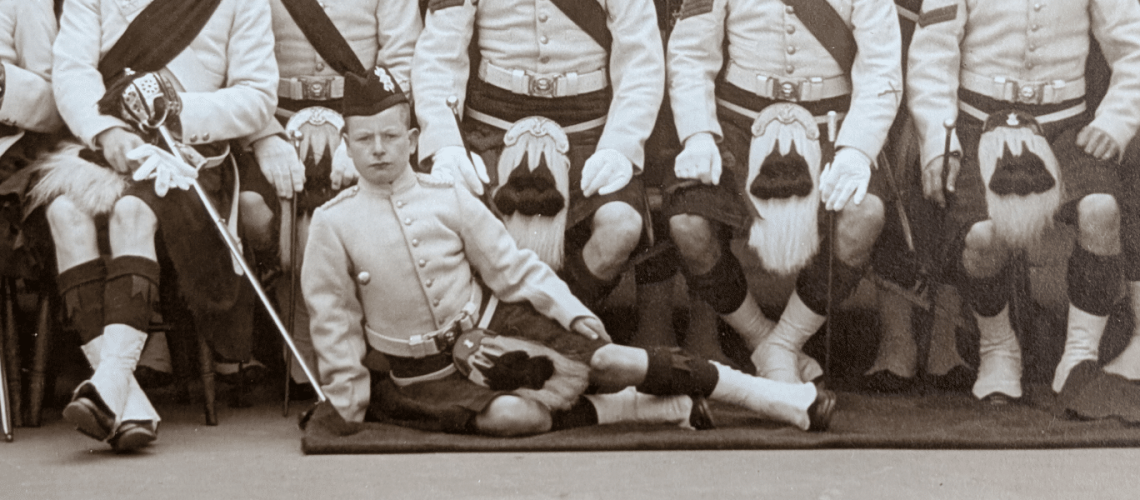
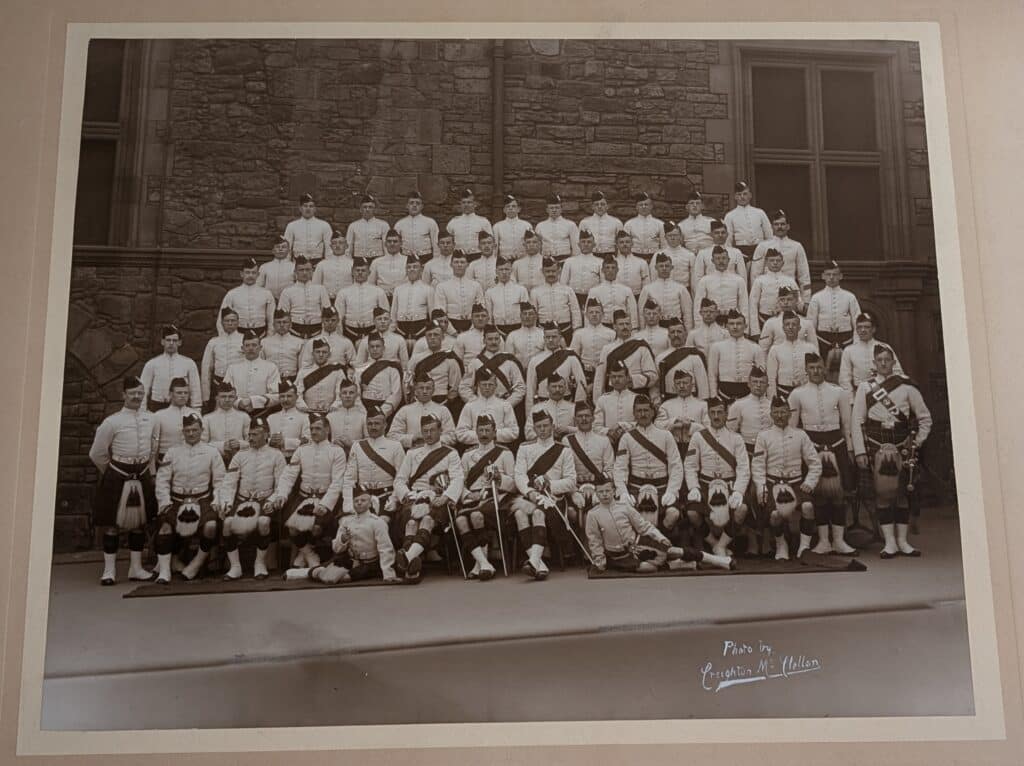
We don’t know the name of all the boys pictured, but the group photo above described the two boys at the front as Boy G Blair and Boy H Wynd. This is a photograph of D Company, 1st Battalion, Black Watch, taken in 1912 by photographer Creighton McClellan.
A close up of “Boy H Wynd” was included in the exhibition and through research using the regimental archive and online resources we have been able to learn more about his life and service.
Who was Harry Wynd?
Harry Smith Wynd was born in 1896 in the Parish of Tibbermore, Perthshire. His parents were Andrew Wynd of Denny and Sarah Jane Wynd (nee Simpson) of Glasgow. They married in 1884 in Perth and Harry is one of at least seven children brought up in Perthshire.
By the time of the 1901 census, Harry’s dad was working as a Stationary Engineman and the family were living in the village of Cottown. Harry was four years old and would have spent most of his time at home with his mother and his baby sister Jane, whilst the older children were at school.
On 1 November 1911, Harry was 15 years old. On this day he enlisted to join The Black Watch as a Boy; too young to enlist as a Private. He was allocated regimental number 2189. We learn this information from Depot roll books held in the museum archive.
Unfortunately we don’t have access to Harry’s service papers, but this is the case for many who served at this time. During the Second World War, the War Office record store was bombed, resulting in the loss of many soldiers’ records.
However, we can piece together a picture of his service based on other records that have survived. He served with the 2nd Battalion, Black Watch during the First World War. It is possible that he was with the battalion in India when they were called to service in France. Harry first entered a theatre of war on 12 October 1914. Before that year was out, Harry’s battalion had already taken part in the Defence of Festubert and the Defence of Givenchy.
In September 1915, a hospital record lists Harry, aged 19, as having suffered a gun shot wound to the head. He was moved to the hospital ship “St George”. We’re not sure what happened to Harry after he recovered, but in July 1917 he was transferred to home service with the 395th Home Service Employment Company. For his war service, Harry was awarded the British War Medal, Victory Medal and 1914 Star.
See Harry's photograph in Highland Laddies
Harry’s photograph is currently featured in our Highland Laddies exhibition, which is open to visitors until 30 August. If you’re visiting before the exhibition closes, look out for Boy H. Wynd among the photographs on display.